

Updated April 2026 | 8 min read | By the team at Ken Rhodes | 35+ years installing doors across Essex
If you are shopping for a new front door, you have probably narrowed it down to two options: composite or UPVC. Both are popular, both are widely available, and both are a significant step up from an old wooden door that has seen better days.
But they are not the same product. They differ in how they are built, how long they last, how secure they are, how much they cost, and how they look after five, ten or twenty years of Essex weather.
We have been fitting both types across Essex for over 35 years, from Chelmsford to Romford to Southend. This guide breaks down the honest differences so you can decide which is right for your home, your budget and your priorities.
What is a composite door?
A composite door is made from multiple materials layered together. The outer skin is typically GRP (glass reinforced plastic), which gives it that solid, timber-like appearance. Inside, there is a high-density foam core for insulation, supported by a solid timber or engineered timber subframe. The inner face is usually UPVC or GRP.
The result is a door that looks and feels like solid wood but does not come with the maintenance headaches of real timber. It will not rot, warp, swell or need repainting every few years.
We supply composite doors from four leading manufacturers: Solidor, Endurance, Hallmark and Universal. Each has slightly different construction methods, but all deliver the same core benefits of strength, insulation and long-term durability.
“Having tested countless composite door suppliers over the years, we have refined our catalogue to feature manufacturers like Solidor and Endurance because of their uncompromising reliability. The build quality speaks for itself; you can feel the rigidity of the 48mm solid timber core the moment you open them. It is a standard of engineering that means we have had virtually zero callback issues in over a decade of installations.”
Ken Rhodes
What is a UPVC door?
UPVC (unplasticised polyvinyl chloride) doors are made from a rigid plastic framework with a multi-chambered profile. Those internal chambers trap air and provide insulation, while the material itself is weatherproof, rust-proof and low maintenance.
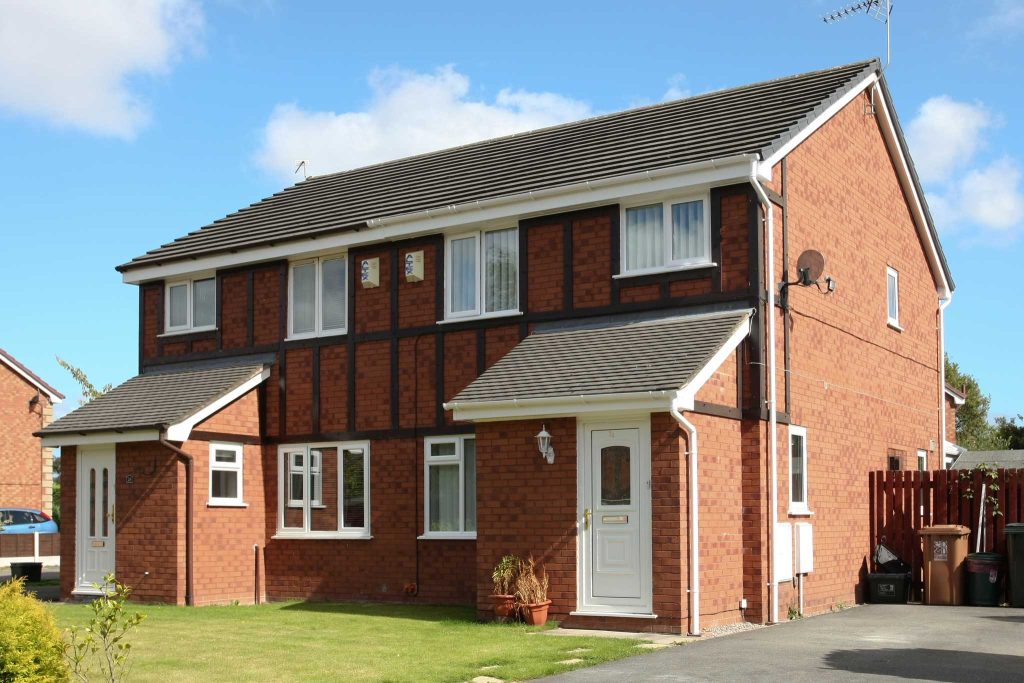
Modern UPVC entrance doors are a world away from the flimsy panel doors of the 1990s. Today’s A++ rated UPVC doors feature reinforced steel cores, multi-point locking systems and a wide range of colours and finishes. They will never need repainting and can be cleaned with nothing more than a warm soapy cloth.
If you have ever wondered whether you can change the colour of an existing UPVC door, we have covered that separately in our guide to painting UPVC. Short answer: it is possible, but rarely as good as a factory finish.
Composite vs UPVC doors: side-by-side comparison
Here is how the two stack up across the factors that matter most when choosing a front door.
| Factor | Composite door | UPVC door |
|---|---|---|
| Typical cost (fitted) | £900 to £1,800+ | £500 to £1,100 |
| Lifespan | ~35 years | 20 to 25 years |
| Security | Excellent. 44mm+, Secured by Design, Ultion lock upgrades | Good. Multi-point locking, steel core. Thinner at ~28mm |
| Thermal efficiency | Superior. Foam core reduces heat loss by up to 25% | Good. Multi-chambered profile, solid insulation |
| Appearance | Timber-effect, solid feel, 25+ colours | Clean, modern. Noticeable plastic sheen |
| Weight | Heavy (robust frame and hinges needed) | Lightweight |
| Maintenance | Minimal. Wipe down. No painting | Minimal. Wipe down. No painting |
| Noise insulation | Very good. Dense core absorbs sound | Moderate. Thinner profile, more noise |
| Colour fade | Excellent. GRP holds colour for decades | Moderate. Can yellow over 10 to 15 years |
| Heat expansion | Can swell slightly in direct sun (temporary) | Stable in most conditions |
| Warranty | 10 to 15 years | 10 years |
“When customers open a composite door for the first time after having UPVC, the thing they always comment on is the sheer weight of it. You completely lose that hollow, lightweight rattle you get with older plastic doors. Instead, when you pull a Solidor or an Endurance shut, it closes with a heavy, reassuring ‘thud’, a lot like shutting the door on a high-end German car. That physical heft is usually the exact moment they realise how much more secure their home just became.”
Ken Rhodes
Security: how do they compare?
This is one of the biggest reasons people upgrade to composite. A standard composite door is around 44mm to 48mm thick, compared to roughly 28mm for most UPVC doors. That extra thickness makes forced entry significantly harder.
Most composite doors we fit meet Secured by Design standards, which is the official UK police-backed security initiative. We also offer upgrades to Ultion locks, which carry a £2,000 security guarantee against lock-snapping.
That said, a well-specified UPVC door with multi-point locking and reinforced steel is not a pushover. For many homes, particularly where the front door is visible from the street and well-lit, UPVC provides perfectly adequate security.
Where we see the security argument tip decisively towards composite is on exposed or secluded doorways, side entrances, and homes that have been targeted before. If security is your number one concern, we also supply Gerda high-security front doors, which are in a class of their own.
“We had a customer over in Wickford who unfortunately suffered a break-in when burglars easily snapped the lock on their old UPVC door. After we fitted a Solidor composite paired with a 3-Star Ultion lock, the same opportunists actually tried their luck a few months later. This time, the Ultion cylinder triggered its ‘lockdown mode’ exactly as it is designed to, and the solid timber core refused to budge. They gave up after a couple of minutes of pointless scratching around the handle. The family did not even know it had happened until they saw the marks the next morning.”
Ken Rhodes
Energy efficiency and keeping your home warm
Both door types are a major improvement over old timber or single-glazed doors. But composite has a clear edge here.
The high-density foam core in a composite door acts as a continuous thermal barrier. Combined with modern weatherseals and double or triple glazed panels, a well-fitted composite door can reduce heat loss through the doorway by up to 25%.
UPVC doors rely on their multi-chambered profile for insulation, which is effective but less thermally efficient than a solid foam core. If your hallway feels draughty in winter, you will notice a bigger difference with composite.
For either type, the quality of the installation matters as much as the door itself. A poorly fitted composite door will leak more heat than a well-fitted UPVC one. That is why we measure every opening individually and never rely on standard sizes.
Appearance and kerb appeal
This is subjective, but the market has spoken: composite doors now outsell UPVC for front doors across the UK.
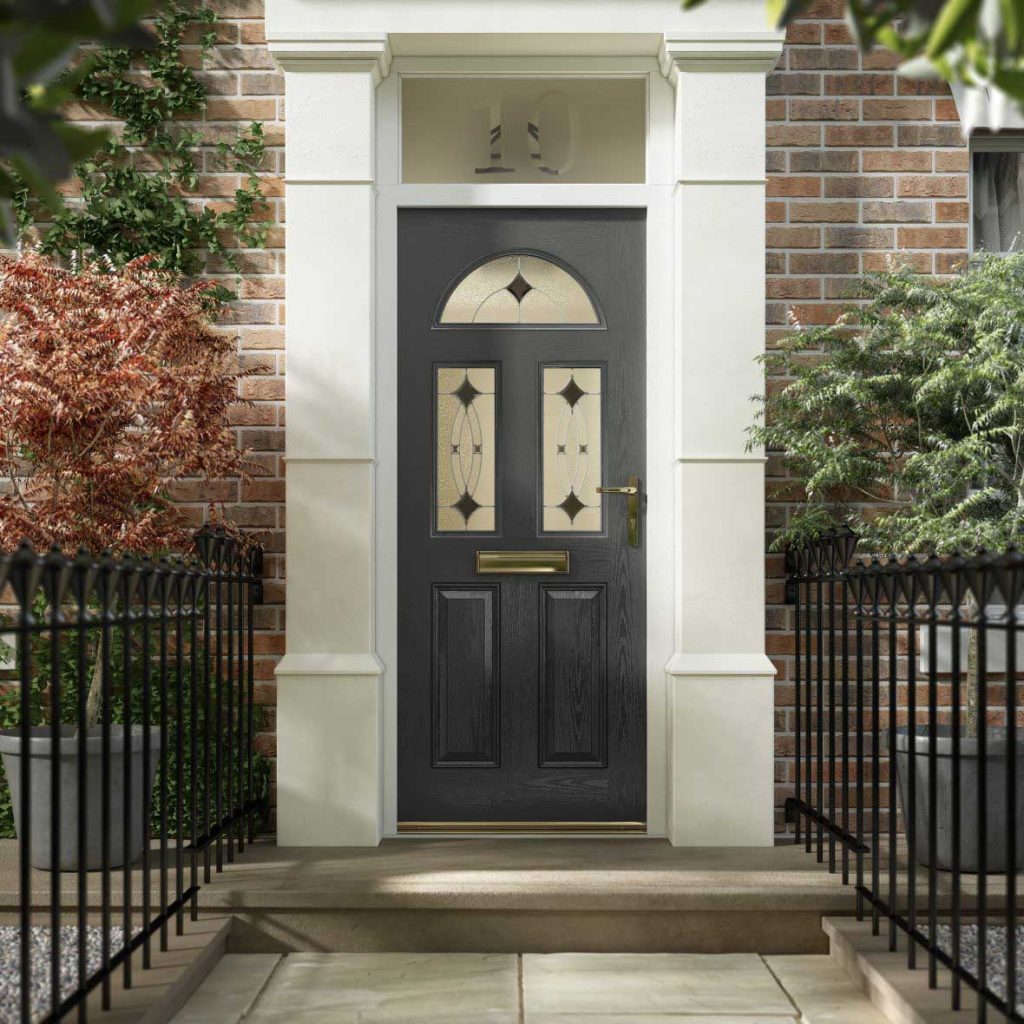
The GRP outer skin on a composite door can be moulded to replicate the grain and texture of real timber. From the pavement, a good composite door is virtually indistinguishable from a hand-painted wooden door, but without the yearly sanding and repainting.
We currently offer over 25 colours for composite doors, from classic Black and Chartwell Green to more contemporary options like Duck Egg Blue and Twilight Grey.
UPVC doors have improved enormously in the colour department. Woodgrain foils and coloured finishes are widely available. But up close, UPVC still has a plastic sheen that composite does not, and white UPVC can yellow slightly over 10 to 15 years of UV exposure.
“The colour we fit most right now is Agate Grey. Five years ago, everyone wanted Chartwell Green for that classic heritage look. Anthracite grey has been absolutely huge since then, but we are starting to see a massive shift toward softer, warmer neutrals. Agate and Pebble grey give a property a highly modern, premium feel, but they do not look quite as harsh or heavy against traditional Essex brickwork as the darker greys do.”
Ken Rhodes
Cost: what will you actually pay?
Let’s talk numbers. Prices vary depending on style, glazing, hardware and manufacturer, but here is a realistic guide based on what we see in Essex.
| Door type | Supply and fit (typical) | Cost per year over lifespan |
|---|---|---|
| UPVC front door | £500 to £1,100 | £25 to £55/year (over 20 years) |
| Composite front door | £900 to £1,800+ | £26 to £51/year (over 35 years) |
That per-year figure is worth looking at. Yes, composite costs more upfront, but spread over its longer lifespan the annual cost is often comparable to UPVC. Factor in better energy efficiency (lower heating bills) and higher kerb appeal (adds value when selling), and composite frequently works out as the better long-term investment.
If budget is tight, a quality UPVC door is absolutely not a compromise. It is still a secure, insulated, low-maintenance door that will serve you well for two decades. We would always rather fit a good UPVC door than a cheap composite one.
“I always tell customers the absolute truth about where to allocate their budget. If you can stretch to a composite for the front door, do it. But for a back door or side entrance, UPVC is completely fine. To be brutally honest, only you and the dog really look at the back door. Upgrading to a high-quality UPVC frame there will keep you perfectly warm and secure while saving you hundreds of pounds.”
Ken Rhodes
Lifespan and long-term durability
A quality composite door will last around 35 years. A UPVC door typically lasts 20 to 25 years. Both assume professional fitting and reasonable care.
The difference shows most over time. After 15 to 20 years, UPVC can start to show its age: slight discolouration, the odd hairline crack in extreme cases, and seals that need replacing. Composite doors generally still look close to new at the 20-year mark because the GRP skin does not degrade the same way.
Hardware is a different story. Locks, handles and hinges will need maintenance or replacement on either door type at around the 10 to 15 year mark. That is normal wear, not a product fault.
Maintenance: what is actually involved?
Good news: both are genuinely low maintenance compared to timber.
Composite doors: Wipe down the GRP surface with warm soapy water a few times a year. Oil the hinges and lock mechanism annually. That is it. No painting, no staining, no sanding.
UPVC doors: Same approach. Warm soapy water, occasional hinge oil. Avoid abrasive cleaners that can scratch the surface. If the door starts to look dull after 10+ years, specialist UPVC restorer products can bring it back.
Neither type requires the level of upkeep that a wooden door demands. If you currently have a UPVC product and are happy with the maintenance, composite will be just as easy.
Noise insulation
This is a factor most comparison guides overlook, but it matters if you live on a busy road or near a flight path.
Composite doors are significantly better at blocking sound. The dense foam core and thicker profile absorb more noise than the hollow-chambered UPVC construction. If you are replacing an old door partly because of road noise, composite will make a more noticeable difference.
For maximum sound reduction, pair a composite door with triple-glazed windows and you will transform the noise levels in your hallway.
Which door is right for you?
Choose composite if:
- It is your main front door and kerb appeal matters
- Security is a top priority
- You want the longest possible lifespan
- You live on a busy or noisy road
- You plan to stay in the property long-term (or want to add value for resale)
Choose UPVC if:
- Budget is the primary concern
- It is a back door, side entrance or less visible doorway
- You are doing a whole-house window and door replacement and need to manage costs
- You want a reliable, low-maintenance door without the premium price tag
“If I was fitting a door on my own house, I would spend the extra money where the weather hits hardest and the neighbours see it. For most of our customers in Essex, we end up recommending a custom composite for the front and a clean, durable UPVC for the back doors. It is the best of both worlds without blowing the budget.”
Ken Rhodes
What about other door types?
Composite and UPVC are the most common choices for front doors, but they are not the only options. Depending on your home and what you are trying to achieve, it is worth considering:
- Bi-fold doors for rear openings that open up to the garden
- French doors for a classic double-opening patio entrance
- Sliding doors for maximum glass and minimal footprint
- Composite fire doors for internal fire safety requirements
- Gerda high-security doors if maximum security is the priority
We can talk you through all the options when you visit our showroom in Upminster, where we have working examples of every door type on display.
Not sure which door is right for your home?
We have been fitting composite and UPVC doors across Essex for over 35 years. Book a free, no-obligation quote and we will measure up, talk through the options and give you an honest recommendation.
Get a Free Quote | FENSA accredited | 15-year guarantee | 9.3/10 from 139 reviews
Frequently asked questions
What are the disadvantages of a composite door?
The main disadvantage is cost. Composite doors typically cost 40% to 60% more than a comparable UPVC door. They are also heavier, which means the frame and hinges need to support more weight. In direct sunlight, some composite doors can expand slightly and become stiff to open, though this is temporary and resolves as the door cools. Despite these trade-offs, most homeowners find the improved security, lifespan and appearance worth the extra investment.
Is a composite door better than a UPVC door?
In most cases, yes. Composite doors outperform UPVC on security, thermal efficiency, lifespan (35 years vs 20 to 25 years) and kerb appeal. However, if budget is the primary concern and you need a reliable, low-maintenance front door, a well-specified UPVC door with multi-point locking is still a solid choice. The right answer depends on your priorities and what you are willing to invest.
Are composite doors worth the extra money?
For most front doors, yes. When you factor in the longer lifespan (35 years vs 20 to 25 years for UPVC), better energy efficiency, higher security rating, and the fact that composite doors hold their appearance without fading or warping, the total cost of ownership is often comparable to UPVC over the life of the door. If it is a front door that visitors and potential buyers will see, the investment in composite usually pays for itself in kerb appeal alone.
Will a composite door make my house warmer?
Yes. Composite doors have a foam-filled core with significantly better thermal insulation than UPVC. A properly fitted composite door can reduce heat loss through the doorway by up to 25%. Combined with modern weatherseals and double or triple glazing, you should notice a real difference in draft reduction and warmth retention, particularly in hallways.
How long do composite doors last?
A quality composite door from a reputable manufacturer (such as Solidor, Endurance or Hallmark) will typically last around 35 years with minimal maintenance. UPVC doors generally last 20 to 25 years. Both lifespans assume professional installation and occasional cleaning.
Can you paint a UPVC door?
Technically yes, but it is not straightforward. UPVC requires specialist primer and paint, and the finish rarely matches the depth of colour you get from a factory-finished door. If your existing UPVC needs a refresh, we have written a separate guide on painting UPVC. If you are unhappy with the colour, it may be worth comparing the cost of repainting against a replacement door in the colour you actually want.
Do I need a new frame when replacing my door?
Usually yes, especially when upgrading from UPVC to composite. Composite doors are heavier and require a frame that can support the additional weight. Fitting a composite door into an old UPVC frame can lead to alignment issues, sagging and poor security performance. We always assess the frame as part of our survey and include replacement in the quote if needed.